Not fully — but you probably need less photography than you think. The 2026 consensus across the guides is a hybrid: shoot a real, accurate hero image for Slot 1, then use AI to expand Slots 2–7 (lifestyle scenes, infographics, A+ concepts) from verified source photos. AI replaces the volume of a shoot, not the truth of one.
Amazon’s own AI tools are ad-console tools, which I inventory in the companion question post — this post answers the narrower question: do you still need the shoot? And I covered the AI-generator workflow hands-on in post 849.
The slot-by-slot rule
Slot 1 is the most scrutinized image in your gallery — the first thing shoppers see and the one Amazon’s compliance checks watch most closely. The 2026 consensus is conservative: use an accurate, realistic product image for the main image. SalesDuo’s 2026 AI-vs-photos guide calls professional photography “often the lowest-risk choice” for complex, reflective, technical, or color-sensitive products — while adding that hiring a photographer is not a universal Amazon requirement. (My main-image rule covers this in detail.)
Slots 2–7 and A+ are where AI earns its keep. SalesDuo calls the strongest 2026 workflow “hybrid”: capture a verified hero image, use AI to develop Slots 2–7 and A+ concepts at scale — then review every output for accuracy, claims, and compliance. An adverio.io 2026 guide puts it even more bluntly: “AI doesn’t replace photography. It extends it.”
Where AI photography genuinely fails
AI drift is the failure mechanism: generative outputs can silently shift logo placement, button counts, stitch patterns, fabric weight, color, even packaging details. It’s invisible at thumbnail size and obvious on delivery day — how you earn returns and negative reviews.
Two qualifications. First, the most important tool criterion (funshot’s 2026 guide): reference-image tools vs text-to-image tools. When the AI builds around your photo, labels, shapes, and colors are preserved. When it generates from a prompt alone, it redraws the product from imagination and will distort small details. For Amazon work, always choose the reference-image lane.
Second, some categories still want a real shoot, full stop: fine jewelry, premium fabrics, apparel on live models — anywhere texture, material, or precise color is the purchase signal. One 2026 guide claims AI can produce images “indistinguishable from studio photography in controlled tests” — but “controlled tests” is doing heavy lifting there.

A genuine conflict you should know about
I’ll be honest that the guides disagree on the main image. One 2026 guide (ju.productions) reads Amazon’s requirements as requiring a professional photograph for the main image outright — while several others (SalesDuo, funshot, omagic, flowcay) frame AI-generated main images as acceptable so long as the image is accurate and meets Amazon’s specs. To my knowledge, Amazon has not published a one-line “no AI main images” rule. My working rule keeps you compliant under both readings: real photograph for Slot 1, AI for the gallery.
The cost math sellers actually ask about
Attribution first — these are 2026 guide claims, not my verified data. flowcay cites AI photo tools at $20–100/month for mid-volume sellers versus $50–500 per SKU for a real photo shoot; omagic cites $0.50–$1 per AI image versus $25–$150 per image for traditional studio work. Directionally everyone agrees AI wins on volume economics — but no source carries a verified conversion comparison of AI vs real photos for Amazon. The shoot-then-expand workflow is what makes the math real: adverio notes a base shoot of just 3–5 images can become the source set the AI layer expands into a full gallery — you need less photography, not none.
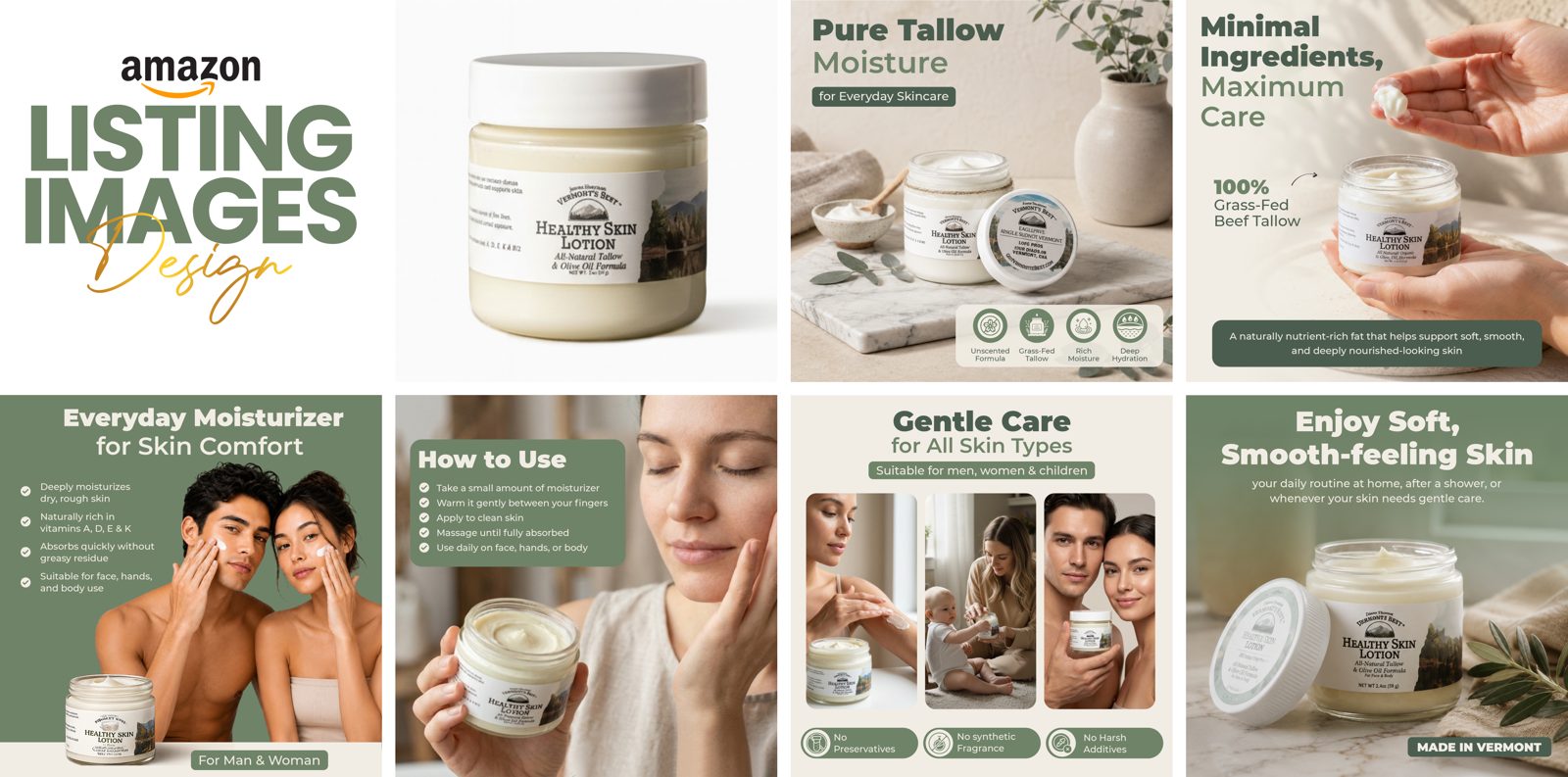
The hybrid checklist: 5 steps before you skip the shoot
- Shoot the hero and the source set. Slot 1 plus 3–5 clean, accurate product photos — clean lighting, true color, real texture. This is the non-negotiable part.
- Choose reference-image tools, not text-to-image. The AI builds around your product photo — it must never redraw the product from a prompt.
- Expand, don’t invent. Lifestyle backgrounds, scene variations, infographic overlays — all traced back to the verified source photos.
- Review every output against the physical product. Labels, colors, proportions, accessories, packaging — the drift list.
- Tag synthetic people, not synthetic products. Photorealistic AI people need the synthetic-performer metadata (see post 855).
If the review step sounds like work you’d rather hand to someone who’s done it thousands of times, that’s what my listing image service covers.
Quick FAQ
Can the main image be AI-generated?
Maybe — the guides genuinely conflict. Amazon’s published standard is accuracy, not a named process. But the main image is your highest-risk slot: real photograph for Slot 1, AI for the gallery. Details in post 763.
Is there an Amazon rule against AI product photos?
No published one-line ban exists. Amazon’s image guidance focuses on accurate product representation — AI-assisted images may be used when the final image is accurate and compliant (SalesDuo 2026).
How much photography do I actually need for one product?
A small base set — Slot 1 plus a handful of clean source photos (adverio cites 3–5) — then AI expansion for the rest. Less photography than the old full-shoot model, not zero.

Azam Khan Tarakai
Founder, Lystiq Creative — Amazon Listing Image & A+ Content Designer
I design Amazon listing images, A+ Content, Brand Stories and Storefronts that turn browsers into buyers — built on my C.A.S.H. Creative Framework™.