No — not directly. Amazon has never confirmed listing images as a direct ranking factor, and honest ranking guides agree they aren’t one. But images do move ranking indirectly, through the two buyer-behavior signals Amazon’s algorithm demonstrably watches: click-through rate and conversion rate. Better images → more clicks and more purchases → more sales velocity → better organic rank. It is a chain, not a switch — and the distinction matters, because it changes what you should expect from a redesign.
Why the question keeps coming up. Sellers hear “images matter for SEO” from agencies selling design, and the phrase quietly morphs into “Amazon reads your images and rewards the pretty ones.” Let me be precise about what I believe is true, because I’ve now answered the sibling question for A+ Content too (does A+ Content improve Amazon rankings?) and the mechanism here rhymes: the image never talks to the algorithm directly; it talks to the shopper, and the shopper’s behavior talks to the algorithm.
The indirect chain, step by step.
1. The main image owns your click-through rate. Your main image is the only image that shows up in search results — it’s what shoppers compare before they ever visit your page. A sharper, more compelling main image wins a higher share of clicks on the same impressions. Multiple ranking guides frame main-image CTR as a direct input the algorithm reads: consistent clicks over competitors signal relevance for the query. I won’t quote a CTR number — anyone selling you a specific lift figure is inventing it — but the mechanism itself is the industry consensus. My main image guide covers how to win clicks while staying inside Amazon’s rules.
2. The gallery owns your conversion rate. Once shoppers land on the page, the gallery does the selling: infographics that answer the top objections, lifestyle shots that show the product in real use, scale and detail panels that remove doubt. Conversion is one of the heaviest inputs into organic rank — Amazon rewards listings that convert the traffic they receive. This is the same mechanism Amazon leans on for its A+ claims (Basic A+ up to 8% sales lift, Premium up to 20%, per Amazon’s own attributed figures — conversion figures, not ranking figures, and not guarantees). Listing images work the same lever, just higher up the page where more shoppers actually look.
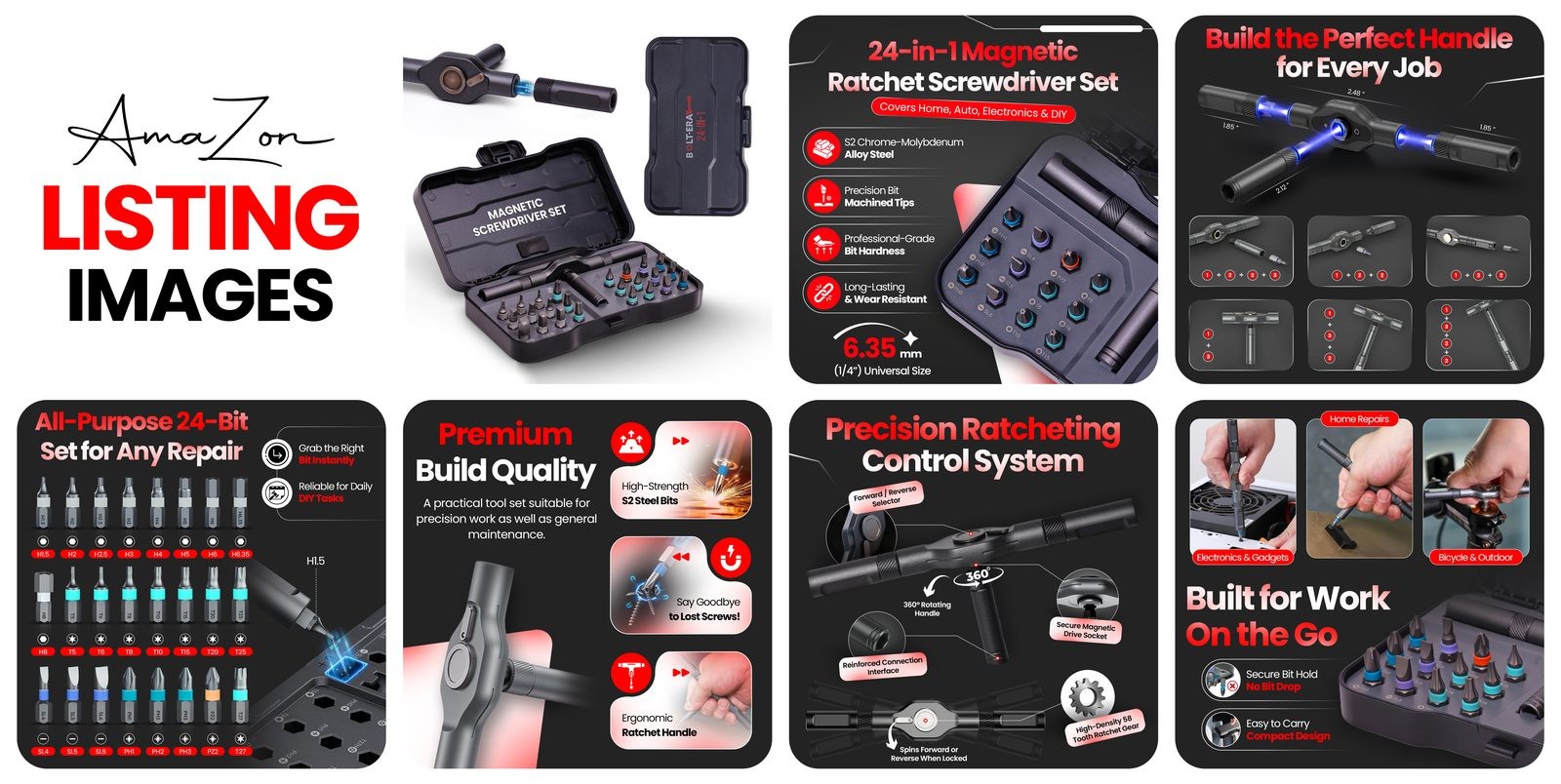
3. Conversion feeds sales velocity, and velocity moves rank. Sustained order volume is the clearest signal Amazon has that shoppers want this product for this search. Images that convert better turn the same traffic into more orders, and more orders over time is what nudges organic position upward.
One important edge case: compliance failures absolutely can kill your ranking. None of the above applies if your main image breaks Amazon’s rules — a suppressed listing doesn’t rank at all, because it doesn’t appear. So the floor of the relationship between images and rank is real: stay compliant or visibility goes to zero. My 2026 listing image checklist is the quick audit for that.
When better images won’t move the needle. Images own the CTR and conversion sides of the equation. If your problem is elsewhere, redesign won’t fix it:
- No impressions: that’s a keyword and relevance problem — covered in my rank #1 playbook.
- Price or review mismatch: priced 20% above the competition with a fraction of the reviews? Images won’t close that gap.
- Stock gaps: going in and out of stock breaks velocity no matter how good the gallery is.
Practical sequencing: fix the main image first (it’s the CTR lever and the compliance risk), then strengthen the gallery for conversion, then judge the results in Seller Central over 2–4 weeks — not days. Ranking moves on sustained behavior, not on the day the new images go up.
Mini-FAQ
So there’s no SEO benefit to great images?
There’s real benefit — it’s just behavioral, not textual. Nobody should be selling you “image SEO” as if Amazon indexes your infographic text for keywords. The benefit is clicks, conversion, velocity. Same destination, different road.
Can bad images actively hurt my rank?
Only indirectly — weak images lose the click and the conversion, and lower conversion drags velocity down. Non-compliant images are the exception: suppression removes you from search entirely until fixed.
Should I redesign images before or after fixing keywords and pricing?
Fix pricing and review gaps first, then keywords (traffic), then the main image (CTR), then the gallery (conversion). Images amplify a listing that already deserves the sale; they can’t rescue one that doesn’t.
If your clicks are low but your impressions are healthy, the main image is usually the culprit. Get in touch — I’ll diagnose it.

Azam Khan Tarakai
Founder, Lystiq Creative — Amazon Listing Image & A+ Content Designer
I design Amazon listing images, A+ Content, Brand Stories and Storefronts that turn browsers into buyers — built on my C.A.S.H. Creative Framework™.
One Response